http://purl.org/csm/1.0#gender

http://www.w3.org/2000/01/rdf-schema#range http://www.w3.org/2001/XMLSchema#unsignedByte
http://www.w3.org/2000/01/rdf-schema#label gender
http://www.w3.org/2000/01/rdf-schema#domain http://purl.org/csm/1.0#HumanRequirement
http://www.w3.org/1999/02/22-rdf-syntax-ns#type http://www.w3.org/2002/07/owl#DatatypeProperty
http://www.w3.org/2000/01/rdf-schema#comment The data property csm:gender defines the gender that a participant should have (use 1-digit gender code according to ISO/IEC 5218; 0 = not known, 1 = male, 2 = female, 9 = not applicable).

http://purl.org/csm/1.0#Money

http://www.w3.org/2000/01/rdf-schema#label money
http://www.w3.org/1999/02/22-rdf-syntax-ns#type http://www.w3.org/2002/07/owl#NamedIndividual
http://purl.org/csm/1.0#RewardType

http://purl.org/csm/1.0#hasPrevious

http://www.w3.org/2000/01/rdf-schema#range http://purl.org/csm/1.0#Task
http://www.w3.org/2000/01/rdf-schema#label has Previous
http://www.w3.org/2000/01/rdf-schema#domain http://purl.org/csm/1.0#Task
http://www.w3.org/2002/07/owl#inverseOf http://purl.org/csm/1.0#hasNext
http://www.w3.org/1999/02/22-rdf-syntax-ns#type http://www.w3.org/2002/07/owl#ObjectProperty

http://purl.org/csm/1.0#Before

http://www.w3.org/2000/01/rdf-schema#label before
http://www.w3.org/1999/02/22-rdf-syntax-ns#type http://www.w3.org/2002/07/owl#NamedIndividual
http://purl.org/csm/1.0#EvaluationTime
http://www.w3.org/2000/01/rdf-schema#comment The evaluation subject is evaluated before starting the crowdsourcing task. This only applies to participants.

http://purl.org/csm/1.0#hasEvaluationMechanism

http://www.w3.org/2000/01/rdf-schema#range http://purl.org/csm/1.0#EvaluationMechanism
http://www.w3.org/2000/01/rdf-schema#label has Evaluation Mechanism
http://www.w3.org/2000/01/rdf-schema#domain http://purl.org/csm/1.0#Task
http://www.w3.org/1999/02/22-rdf-syntax-ns#type http://www.w3.org/2002/07/owl#ObjectProperty

http://purl.org/csm/1.0#Good

http://www.w3.org/2000/01/rdf-schema#label good
http://www.w3.org/1999/02/22-rdf-syntax-ns#type http://www.w3.org/2002/07/owl#NamedIndividual
http://purl.org/csm/1.0#RewardType

http://purl.org/csm/1.0#qualificationLevel

http://www.w3.org/2000/01/rdf-schema#range http://www.w3.org/2000/01/rdf-schema#Literal
http://www.w3.org/2000/01/rdf-schema#label qualification level
http://www.w3.org/2000/01/rdf-schema#domain http://purl.org/csm/1.0#HumanRequirement
http://www.w3.org/1999/02/22-rdf-syntax-ns#type http://www.w3.org/2002/07/owl#DatatypeProperty
http://www.w3.org/2000/01/rdf-schema#comment The data property csm:qualificationLevel defines the proficiency level of a certain qualification (poor, fair, good, very good, excellent).

http://purl.org/csm/1.0#ResourceAccess

http://www.w3.org/2000/01/rdf-schema#label resource access
http://www.w3.org/1999/02/22-rdf-syntax-ns#type http://www.w3.org/2002/07/owl#NamedIndividual
http://purl.org/csm/1.0#RewardType

http://purl.org/csm/1.0#Simple

http://www.w3.org/1999/02/22-rdf-syntax-ns#type http://www.w3.org/2002/07/owl#NamedIndividual

http://purl.org/csm/1.0#Rating

http://www.w3.org/2000/01/rdf-schema#label rating
http://www.w3.org/1999/02/22-rdf-syntax-ns#type http://www.w3.org/2002/07/owl#NamedIndividual
http://purl.org/csm/1.0#EvaluationSpecificity

http://purl.org/csm/1.0#VirtualPoints

http://www.w3.org/2000/01/rdf-schema#label virtual points
http://www.w3.org/1999/02/22-rdf-syntax-ns#type http://www.w3.org/2002/07/owl#NamedIndividual
http://purl.org/csm/1.0#RewardType

http://purl.org/csm/1.0#ThirdParty

http://www.w3.org/2000/01/rdf-schema#label third party
http://www.w3.org/1999/02/22-rdf-syntax-ns#type http://www.w3.org/2002/07/owl#NamedIndividual
http://purl.org/csm/1.0#EvaluationSource
http://www.w3.org/2000/01/rdf-schema#comment A third party organization is contracted to evaluate the contributions or participants.

http://purl.org/csm/1.0#FemaleParticipant

http://www.w3.org/1999/02/22-rdf-syntax-ns#type http://www.w3.org/2002/07/owl#NamedIndividual

http://purl.org/csm/1.0#visibilityMode

http://www.w3.org/2000/01/rdf-schema#range http://www.w3.org/2001/XMLSchema#boolean
http://www.w3.org/2000/01/rdf-schema#label visibility mode
http://www.w3.org/2000/01/rdf-schema#domain http://purl.org/csm/1.0#Task
http://www.w3.org/1999/02/22-rdf-syntax-ns#type http://www.w3.org/2002/07/owl#DatatypeProperty
http://www.w3.org/2000/01/rdf-schema#comment The data property csm:visibilityMode defines whether the workers can or can not see each other’s contributions.

http://purl.org/csm/1.0#Lottery

http://www.w3.org/2000/01/rdf-schema#label lottery
http://www.w3.org/1999/02/22-rdf-syntax-ns#type http://www.w3.org/2002/07/owl#NamedIndividual
http://purl.org/csm/1.0#RewardType

http://purl.org/csm/1.0#Integrative

http://www.w3.org/2000/01/rdf-schema#label integrative
http://www.w3.org/1999/02/22-rdf-syntax-ns#type http://www.w3.org/2002/07/owl#NamedIndividual
http://purl.org/csm/1.0#AggregationType
http://www.w3.org/2000/01/rdf-schema#comment Example: knowledge acquisition and aggregation (similar to accumulative crowdsourcing, collaboration-based)

http://purl.org/csm/1.0#hasEvaluationSubject

http://www.w3.org/2000/01/rdf-schema#range http://purl.org/csm/1.0#EvaluationSubject
http://www.w3.org/2000/01/rdf-schema#label has Evaluation Subject
http://www.w3.org/2000/01/rdf-schema#domain http://purl.org/csm/1.0#EvaluationMechanism
http://www.w3.org/1999/02/22-rdf-syntax-ns#type http://www.w3.org/2002/07/owl#ObjectProperty

http://purl.org/csm/1.0#hasRewardNature

http://www.w3.org/2000/01/rdf-schema#range http://purl.org/csm/1.0#RewardNature
http://www.w3.org/2000/01/rdf-schema#label has Reward Nature
http://www.w3.org/2000/01/rdf-schema#domain http://purl.org/csm/1.0#RewardMechanism
http://www.w3.org/1999/02/22-rdf-syntax-ns#type http://www.w3.org/2002/07/owl#ObjectProperty

http://purl.org/csm/1.0#language

http://www.w3.org/2000/01/rdf-schema#range http://www.w3.org/2001/XMLSchema#language
http://www.w3.org/2000/01/rdf-schema#label language
http://www.w3.org/2000/01/rdf-schema#domain http://purl.org/csm/1.0#HumanRequirement
http://www.w3.org/1999/02/22-rdf-syntax-ns#type http://www.w3.org/2002/07/owl#DatatypeProperty
http://www.w3.org/2000/01/rdf-schema#comment The data property csm:language defines the language that a participant should speak (use 2-digit language code according to ISO 639-1).

http://purl.org/csm/1.0#confidentialityLevel

http://www.w3.org/2000/01/rdf-schema#label confidentiality level
http://www.w3.org/2000/01/rdf-schema#domain http://purl.org/csm/1.0#Task
http://www.w3.org/2000/01/rdf-schema#seeAlso Corney, J. R., Torres-Sánchez, C., Jagadeesan, A. P., Yan, X. T., Regli, W. C., & Medellin, H. (2010). Putting the crowd to work in a knowledge-based factory. Advanced Engineering Informatics, 24(3), 243–250.
http://www.w3.org/1999/02/22-rdf-syntax-ns#type http://www.w3.org/2002/07/owl#DatatypeProperty
http://www.w3.org/2000/01/rdf-schema#comment The data property csm:confidentialityLevel classifies if the task and the associated documents that can be shared with third parties.

http://purl.org/csm/1.0#HighConfidential

http://www.w3.org/1999/02/22-rdf-syntax-ns#type http://www.w3.org/2002/07/owl#NamedIndividual

http://purl.org/csm/1.0#External

http://www.w3.org/2000/01/rdf-schema#label external
http://www.w3.org/1999/02/22-rdf-syntax-ns#type http://www.w3.org/2002/07/owl#NamedIndividual
http://purl.org/csm/1.0#TargetAudience
http://www.w3.org/2000/01/rdf-schema#comment Example: to gain insights about service experience, provide ideas for new product design

http://purl.org/csm/1.0#AllParticipants

http://www.w3.org/2000/01/rdf-schema#label all participants
http://www.w3.org/1999/02/22-rdf-syntax-ns#type http://www.w3.org/2002/07/owl#NamedIndividual
http://purl.org/csm/1.0#PayoutMethod

http://purl.org/csm/1.0#hasActionType

http://www.w3.org/2000/01/rdf-schema#range http://purl.org/csm/1.0#ActionType
http://www.w3.org/2000/01/rdf-schema#label has Action Type
http://www.w3.org/2000/01/rdf-schema#domain http://purl.org/csm/1.0#Task
http://www.w3.org/1999/02/22-rdf-syntax-ns#type http://www.w3.org/2002/07/owl#ObjectProperty

http://purl.org/csm/1.0#jobTitle

http://www.w3.org/2000/01/rdf-schema#range http://www.w3.org/2001/XMLSchema#string
http://www.w3.org/2000/01/rdf-schema#label job title
http://www.w3.org/2000/01/rdf-schema#domain http://purl.org/csm/1.0#HumanRequirement
http://www.w3.org/1999/02/22-rdf-syntax-ns#type http://www.w3.org/2002/07/owl#DatatypeProperty
http://www.w3.org/2000/01/rdf-schema#comment The data property csm:jobTitle defines the job title that a participant should have (use 6-digit code of the standard occupational classification (SOC)).

http://purl.org/csm/1.0#Code

http://www.w3.org/2000/01/rdf-schema#label code
http://www.w3.org/1999/02/22-rdf-syntax-ns#type http://www.w3.org/2002/07/owl#NamedIndividual
http://purl.org/csm/1.0#ActionType
http://www.w3.org/2000/01/rdf-schema#comment to develop software

http://purl.org/csm/1.0#MajorityDecision

http://www.w3.org/2000/01/rdf-schema#label majority decision
http://www.w3.org/1999/02/22-rdf-syntax-ns#type http://www.w3.org/2002/07/owl#NamedIndividual
http://purl.org/csm/1.0#EvaluationMethod
http://www.w3.org/2000/01/rdf-schema#comment The majority decision approach assigns the task to multiple users who submit their individual results to the crowdsourcing system, and finally selects the most frequent result.

http://purl.org/csm/1.0#Design

http://www.w3.org/2000/01/rdf-schema#label design
http://www.w3.org/1999/02/22-rdf-syntax-ns#type http://www.w3.org/2002/07/owl#NamedIndividual
http://purl.org/csm/1.0#ActionType
http://www.w3.org/2000/01/rdf-schema#comment to plan or develop something that should be created in the future (compare: create)

http://purl.org/csm/1.0#Verify

http://www.w3.org/2000/01/rdf-schema#label verify
http://www.w3.org/1999/02/22-rdf-syntax-ns#type http://www.w3.org/2002/07/owl#NamedIndividual
http://purl.org/csm/1.0#ActionType
http://www.w3.org/2000/01/rdf-schema#comment to check if data or information is correct or true (synonym: check) (apply csm:test to check products and services)

http://purl.org/csm/1.0#Fixed

http://www.w3.org/2000/01/rdf-schema#label fixed
http://www.w3.org/1999/02/22-rdf-syntax-ns#type http://www.w3.org/2002/07/owl#NamedIndividual
http://purl.org/csm/1.0#RewardNature

http://purl.org/csm/1.0#hasAggregationType

http://www.w3.org/2000/01/rdf-schema#range http://purl.org/csm/1.0#AggregationType
http://www.w3.org/2000/01/rdf-schema#label has Aggregation Type
http://www.w3.org/2000/01/rdf-schema#domain http://purl.org/csm/1.0#Task
http://www.w3.org/1999/02/22-rdf-syntax-ns#type http://www.w3.org/2002/07/owl#ObjectProperty

http://purl.org/csm/1.0#priorityLevel

http://www.w3.org/2000/01/rdf-schema#label priority level
http://www.w3.org/2000/01/rdf-schema#domain http://purl.org/csm/1.0#Task
http://www.w3.org/1999/02/22-rdf-syntax-ns#type http://www.w3.org/2002/07/owl#DatatypeProperty
http://www.w3.org/2000/01/rdf-schema#comment The data property csm:priorityLevel defines the priority of a crowdsourcing task. Depending on the importance of concurrent tasks, the requester may either increase or decrease the attention of the crowd.

http://purl.org/csm/1.0#Rate

http://www.w3.org/2000/01/rdf-schema#label rate
http://www.w3.org/1999/02/22-rdf-syntax-ns#type http://www.w3.org/2002/07/owl#NamedIndividual
http://purl.org/csm/1.0#ActionType
http://www.w3.org/2000/01/rdf-schema#comment to give someone or something a quality value, e.g., on a five star rating scale

http://purl.org/csm/1.0#Complex

http://www.w3.org/1999/02/22-rdf-syntax-ns#type http://www.w3.org/2002/07/owl#NamedIndividual

http://purl.org/csm/1.0#GenerateIdea

http://www.w3.org/2000/01/rdf-schema#label generate idea
http://www.w3.org/1999/02/22-rdf-syntax-ns#type http://www.w3.org/2002/07/owl#NamedIndividual
http://purl.org/csm/1.0#ActionType
http://www.w3.org/2000/01/rdf-schema#comment to collect innovative product or service ideas using brainstorming

http://purl.org/csm/1.0#submissionTime

http://www.w3.org/2000/01/rdf-schema#range http://www.w3.org/2001/XMLSchema#dateTime
http://www.w3.org/2000/01/rdf-schema#label submission time
http://www.w3.org/2000/01/rdf-schema#domain http://purl.org/csm/1.0#Project
http://www.w3.org/1999/02/22-rdf-syntax-ns#type http://www.w3.org/2002/07/owl#DatatypeProperty
http://www.w3.org/2000/01/rdf-schema#comment The data property csm:submissionTime defines the time when the task is accessible for the crowd.

http://purl.org/csm/1.0#Voluntary

http://www.w3.org/2000/01/rdf-schema#label voluntary
http://www.w3.org/1999/02/22-rdf-syntax-ns#type http://www.w3.org/2002/07/owl#NamedIndividual
http://purl.org/csm/1.0#RewardNature

http://purl.org/csm/1.0#LowPriority

http://www.w3.org/1999/02/22-rdf-syntax-ns#type http://www.w3.org/2002/07/owl#NamedIndividual

http://purl.org/csm/1.0#PerformanceBased

http://www.w3.org/2000/01/rdf-schema#label performance based
http://www.w3.org/1999/02/22-rdf-syntax-ns#type http://www.w3.org/2002/07/owl#NamedIndividual
http://purl.org/csm/1.0#RewardNature

http://purl.org/csm/1.0#hasEvaluationMethod

http://www.w3.org/2000/01/rdf-schema#range http://purl.org/csm/1.0#EvaluationMethod
http://www.w3.org/2000/01/rdf-schema#label has Evaluation Method
http://www.w3.org/2000/01/rdf-schema#domain http://purl.org/csm/1.0#EvaluationMechanism
http://www.w3.org/1999/02/22-rdf-syntax-ns#type http://www.w3.org/2002/07/owl#ObjectProperty

http://purl.org/csm/1.0#Label

http://www.w3.org/2000/01/rdf-schema#label label
http://www.w3.org/1999/02/22-rdf-syntax-ns#type http://www.w3.org/2002/07/owl#NamedIndividual
http://purl.org/csm/1.0#ActionType
http://www.w3.org/2000/01/rdf-schema#comment to give someone or something a title or a name (synonym: tag)

http://purl.org/csm/1.0#hasExternalResource

http://www.w3.org/2000/01/rdf-schema#range http://purl.org/csm/1.0#ExternalResource
http://www.w3.org/2000/01/rdf-schema#label has External Resource
http://www.w3.org/2000/01/rdf-schema#domain http://purl.org/csm/1.0#Task
http://www.w3.org/1999/02/22-rdf-syntax-ns#type http://www.w3.org/2002/07/owl#ObjectProperty

http://purl.org/csm/1.0#goal

http://www.w3.org/2000/01/rdf-schema#range http://www.w3.org/2000/01/rdf-schema#Literal
http://www.w3.org/2000/01/rdf-schema#label goal
http://www.w3.org/2000/01/rdf-schema#domain http://purl.org/csm/1.0#Project
http://www.w3.org/1999/02/22-rdf-syntax-ns#type http://www.w3.org/2002/07/owl#DatatypeProperty
http://www.w3.org/2000/01/rdf-schema#comment The data property csm:goal is a free text that contains the goal of the task.

http://purl.org/csm/1.0#FreeForm

http://www.w3.org/2000/01/rdf-schema#label free form
http://www.w3.org/1999/02/22-rdf-syntax-ns#type http://www.w3.org/2002/07/owl#NamedIndividual
http://purl.org/csm/1.0#EvaluationSpecificity

http://purl.org/csm/1.0#SolveProblem

http://www.w3.org/2000/01/rdf-schema#label solve problem
http://www.w3.org/1999/02/22-rdf-syntax-ns#type http://www.w3.org/2002/07/owl#NamedIndividual
http://purl.org/csm/1.0#ActionType
http://www.w3.org/2000/01/rdf-schema#comment to solve complex theoretical and practical problems, e.g, finding an algorithm

http://purl.org/csm/1.0#numberOfAssignments

http://www.w3.org/2000/01/rdf-schema#range http://www.w3.org/2001/XMLSchema#unsignedInt
http://www.w3.org/2000/01/rdf-schema#label number of assignments
http://www.w3.org/2000/01/rdf-schema#domain http://purl.org/csm/1.0#Task
http://www.w3.org/1999/02/22-rdf-syntax-ns#type http://www.w3.org/2002/07/owl#DatatypeProperty
http://www.w3.org/2000/01/rdf-schema#comment The data property csm:numberOfAssignments defines the number of participants who will be assigned to one task.

http://purl.org/csm/1.0#Coupon

http://www.w3.org/2000/01/rdf-schema#label coupon
http://www.w3.org/1999/02/22-rdf-syntax-ns#type http://www.w3.org/2002/07/owl#NamedIndividual
http://purl.org/csm/1.0#RewardType

http://purl.org/csm/1.0#hasPayoutMethod

http://www.w3.org/2000/01/rdf-schema#range http://purl.org/csm/1.0#PayoutMethod
http://www.w3.org/2000/01/rdf-schema#label has Payout Method
http://www.w3.org/2000/01/rdf-schema#domain http://purl.org/csm/1.0#RewardMechanism
http://www.w3.org/1999/02/22-rdf-syntax-ns#type http://www.w3.org/2002/07/owl#ObjectProperty

http://purl.org/csm/1.0#currency

http://www.w3.org/2000/01/rdf-schema#range http://www.w3.org/2001/XMLSchema#string
http://www.w3.org/2000/01/rdf-schema#label currency
http://www.w3.org/2000/01/rdf-schema#domain http://purl.org/csm/1.0#RewardMechanism
http://www.w3.org/1999/02/22-rdf-syntax-ns#type http://www.w3.org/2002/07/owl#DatatypeProperty
http://www.w3.org/2000/01/rdf-schema#comment The data property csm:currency defines the currency of a monetary reward (use 3-digit currency code according to ISO 4217).

http://purl.org/csm/1.0#hasRewardType

http://www.w3.org/2000/01/rdf-schema#range http://purl.org/csm/1.0#RewardType
http://www.w3.org/2000/01/rdf-schema#label has Reward Type
http://www.w3.org/2000/01/rdf-schema#domain http://purl.org/csm/1.0#RewardMechanism
http://www.w3.org/1999/02/22-rdf-syntax-ns#type http://www.w3.org/2002/07/owl#ObjectProperty

http://purl.org/csm/1.0#hasEvaluationSource

http://www.w3.org/2000/01/rdf-schema#range http://purl.org/csm/1.0#EvaluationSource
http://www.w3.org/2000/01/rdf-schema#label has Evaluation Source
http://www.w3.org/2000/01/rdf-schema#domain http://purl.org/csm/1.0#EvaluationMechanism
http://www.w3.org/1999/02/22-rdf-syntax-ns#type http://www.w3.org/2002/07/owl#ObjectProperty

http://purl.org/csm/1.0#Rank

http://www.w3.org/2000/01/rdf-schema#label rank
http://www.w3.org/1999/02/22-rdf-syntax-ns#type http://www.w3.org/2002/07/owl#NamedIndividual
http://purl.org/csm/1.0#ActionType
http://www.w3.org/2000/01/rdf-schema#comment to put someone or something in order (synonym: order, arrange)

http://purl.org/csm/1.0#Hybrid

http://www.w3.org/2000/01/rdf-schema#label hybrid
http://www.w3.org/1999/02/22-rdf-syntax-ns#type http://www.w3.org/2002/07/owl#NamedIndividual
http://purl.org/csm/1.0#TargetAudience

http://purl.org/csm/1.0#Discount

http://www.w3.org/2000/01/rdf-schema#label discount
http://www.w3.org/1999/02/22-rdf-syntax-ns#type http://www.w3.org/2002/07/owl#NamedIndividual
http://purl.org/csm/1.0#RewardType

http://purl.org/csm/1.0#complexityLevel

http://www.w3.org/2000/01/rdf-schema#range http://www.w3.org/2000/01/rdf-schema#Literal
http://www.w3.org/2000/01/rdf-schema#label complexity level
http://www.w3.org/2000/01/rdf-schema#domain http://purl.org/csm/1.0#Task
http://www.w3.org/2000/01/rdf-schema#seeAlso Brabham, D. C. (2008). Crowdsourcing as a Model for Problem Solving: An Introduction and Cases. Convergence: The International Journal of Research into New Media Technologies, 14(1), 75–90. Rouse, A. C. (2010). A preliminary taxonomy of crowdsourcing. In ACIS 2010 Proceedings. Schenk, E., & Guittard, C. (2010). Towards a characterization of crowdsourcing practices. Journal of Innovation Economics, 7(1).
http://www.w3.org/1999/02/22-rdf-syntax-ns#type http://www.w3.org/2002/07/owl#DatatypeProperty
http://www.w3.org/2000/01/rdf-schema#comment The data property csm:complexityLevel specifies the amount of skills, experiences and knowledge that is required to solve the crowdsourcing task. Use 'simple', 'moderate', 'complex' to determine the complexity level.

http://purl.org/csm/1.0#AcceptReject

http://www.w3.org/2000/01/rdf-schema#label accept or reject
http://www.w3.org/1999/02/22-rdf-syntax-ns#type http://www.w3.org/2002/07/owl#NamedIndividual
http://purl.org/csm/1.0#EvaluationSpecificity

http://purl.org/csm/1.0#Simultaneously

http://www.w3.org/2000/01/rdf-schema#label simultaneously
http://www.w3.org/1999/02/22-rdf-syntax-ns#type http://www.w3.org/2002/07/owl#NamedIndividual
http://purl.org/csm/1.0#EvaluationTime
http://www.w3.org/2000/01/rdf-schema#comment The evaluation subject is simultaneously evaluated during solving the crowdsourcing task. This applies to both participants and contributions.

http://purl.org/csm/1.0#numberOfApprovedTask

http://www.w3.org/2000/01/rdf-schema#range http://www.w3.org/2001/XMLSchema#unsignedInt
http://www.w3.org/2000/01/rdf-schema#label number of approved task
http://www.w3.org/2000/01/rdf-schema#domain http://purl.org/csm/1.0#HumanRequirement
http://www.w3.org/1999/02/22-rdf-syntax-ns#type http://www.w3.org/2002/07/owl#DatatypeProperty
http://www.w3.org/2000/01/rdf-schema#comment The data property csm:numberOfApprovedTask defines the number of properly solved tasks.

http://purl.org/csm/1.0#interactionMode

http://www.w3.org/2000/01/rdf-schema#range http://www.w3.org/2001/XMLSchema#boolean
http://www.w3.org/2000/01/rdf-schema#label interaction mode
http://www.w3.org/2000/01/rdf-schema#domain http://purl.org/csm/1.0#Task
http://www.w3.org/1999/02/22-rdf-syntax-ns#type http://www.w3.org/2002/07/owl#DatatypeProperty
http://www.w3.org/2000/01/rdf-schema#comment The data property csm:interactionMode enables or disables peer-to-peer collaboration by forbidding or permitting direct communication between the participants.

http://purl.org/csm/1.0#Create

http://www.w3.org/2000/01/rdf-schema#label create
http://www.w3.org/1999/02/22-rdf-syntax-ns#type http://www.w3.org/2002/07/owl#NamedIndividual
http://purl.org/csm/1.0#ActionType
http://www.w3.org/2000/01/rdf-schema#comment to create an artifact or a prototype

http://purl.org/csm/1.0#Iterative

http://www.w3.org/2000/01/rdf-schema#label iterative
http://www.w3.org/1999/02/22-rdf-syntax-ns#type http://www.w3.org/2002/07/owl#NamedIndividual
http://purl.org/csm/1.0#AggregationType

http://purl.org/csm/1.0#Moderate

http://www.w3.org/1999/02/22-rdf-syntax-ns#type http://www.w3.org/2002/07/owl#NamedIndividual

https://mtp.linked.solutions/

http://xmlns.com/foaf/0.1/topic https://mtp.linked.solutions/csm

http://purl.org/csm/1.0#Immediate

http://www.w3.org/2000/01/rdf-schema#label immediate
http://www.w3.org/1999/02/22-rdf-syntax-ns#type http://www.w3.org/2002/07/owl#NamedIndividual
http://purl.org/csm/1.0#LatencyType

http://purl.org/csm/1.0

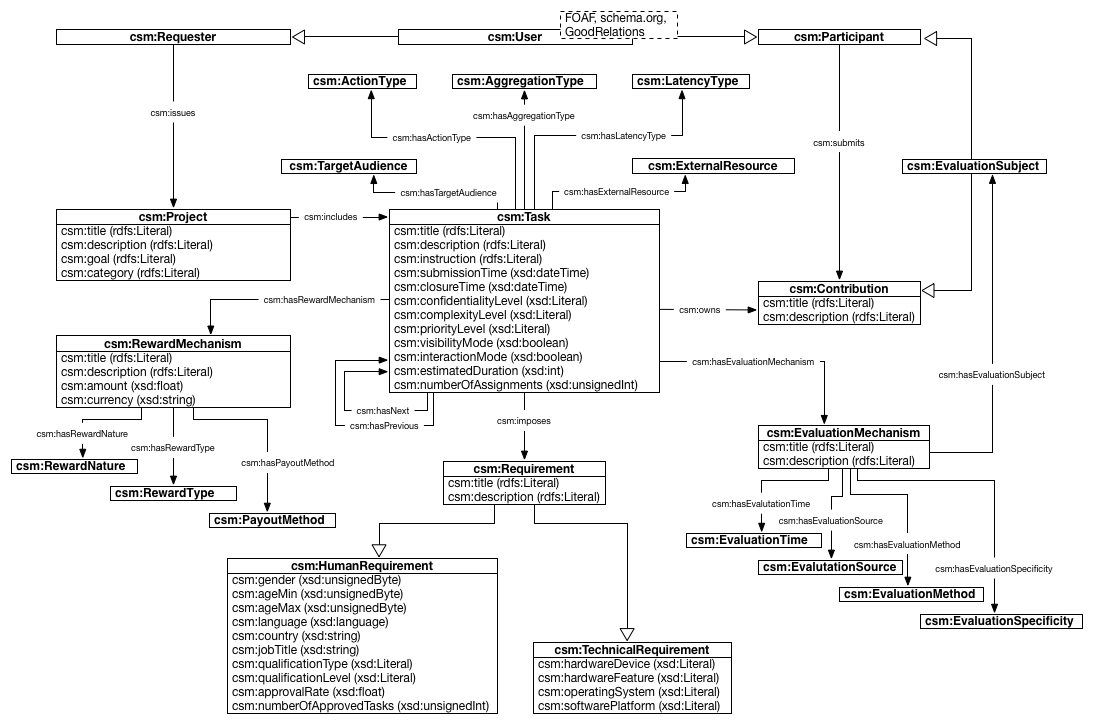
http://purl.org/dc/elements/1.1/description http://www.larshetmank.com/vocabulary/csm-content/csm.png
http://www.w3.org/2002/07/owl#imports http://purl.org/goodrelations/v1
http://xmlns.com/foaf/0.1/
http://purl.org/dc/elements/1.1/creator Lars Hetmank
http://purl.org/dc/elements/1.1/date 2013-09-22
http://www.w3.org/1999/02/22-rdf-syntax-ns#type http://www.w3.org/2002/07/owl#Ontology
http://www.w3.org/2002/07/owl#versionInfo Revision: 1.0
http://purl.org/dc/elements/1.1/rights This work is distributed under a Creative Commons Attribution License (http://creativecommons.org/licenses/by/3.0/).
http://www.w3.org/2000/01/rdf-schema#comment The CSM ontology provides concepts and properties for capturing, storing, and linking crowdsourcing data. The designed ontology contains 24 classes, 22 object properties, and 30 data properties to describe the key aspects of a typical enterprise crowdsourcing activity. All semantic entities of the ontology are supplemented with additional annotation information, whereas the rdfs:comment property is applied to explain the meaning of the entity and the rdfs:seeAlso property offers literature references and suggestions for further reading (currently not rendered by the documentation generator). The anticipated benefits for the crowdsourcing domain are in detail: - Providing of a controlled vocabulary that reduces ambiguity and ensures consistency - Enhanced semantic and intelligent search, navigation, and browsing capabilities - Support of proactive recommendation mechanisms - Improved data exchange and integration - Foundation for knowledge discovery, data mining, and machine learning References: [1] Hetmank, L. (2013). Components and Functions of Crowdsourcing Systems – A Systematic Literature Review. In 11th International Conference on Wirtschaftsinformatik (WI). Leipzig. [2] Hetmank, L. (2013). Towards a Semantic Standard for Enterprise Crowdsourcing – A Scenario-based Evaluation of a Conceptual Prototype. In 21st European Conference on In-formation Systems (ECIS). Utrecht. [3] Hetmank, L. (2014). Developing an Ontology for Enterprise Crowdsourcing. In Multikonferenz Wirtschaftsinformatik (MKWI). Paderborn.
http://purl.org/dc/elements/1.1/title CSM Ontology – An Enterprise Crowdsourcing Ontology

http://purl.org/csm/1.0#description

http://www.w3.org/2000/01/rdf-schema#range http://www.w3.org/2000/01/rdf-schema#Literal
http://www.w3.org/2000/01/rdf-schema#label description
http://www.w3.org/2000/01/rdf-schema#domain http://purl.org/csm/1.0#Project
http://purl.org/csm/1.0#EvaluationMechanism
http://purl.org/csm/1.0#RewardMechanism
http://purl.org/csm/1.0#Task
http://purl.org/csm/1.0#Contribution
http://purl.org/csm/1.0#Requirement
http://purl.org/csm/1.0#ExternalResource
http://www.w3.org/1999/02/22-rdf-syntax-ns#type http://www.w3.org/2002/07/owl#DatatypeProperty
http://www.w3.org/2000/01/rdf-schema#comment The data property csm:description describes the instance readable for humans.

http://purl.org/csm/1.0#Selective

http://www.w3.org/2000/01/rdf-schema#label selective
http://www.w3.org/1999/02/22-rdf-syntax-ns#type http://www.w3.org/2002/07/owl#NamedIndividual
http://purl.org/csm/1.0#AggregationType
http://www.w3.org/2000/01/rdf-schema#comment (similar to competitive crowdsourcing, tournament-based crowdsourcing)

http://purl.org/csm/1.0#Play

http://www.w3.org/2000/01/rdf-schema#label play
http://www.w3.org/1999/02/22-rdf-syntax-ns#type http://www.w3.org/2002/07/owl#NamedIndividual
http://purl.org/csm/1.0#ActionType
http://www.w3.org/2000/01/rdf-schema#comment to play a game

http://purl.org/csm/1.0#hasLatencyType

http://www.w3.org/2000/01/rdf-schema#range http://purl.org/csm/1.0#LatencyType
http://www.w3.org/2000/01/rdf-schema#label has Latency Type
http://www.w3.org/2000/01/rdf-schema#domain http://purl.org/csm/1.0#Task
http://www.w3.org/1999/02/22-rdf-syntax-ns#type http://www.w3.org/2002/07/owl#ObjectProperty

http://purl.org/csm/1.0#Transcribe

http://www.w3.org/2000/01/rdf-schema#label transcribe
http://www.w3.org/1999/02/22-rdf-syntax-ns#type http://www.w3.org/2002/07/owl#NamedIndividual
http://purl.org/csm/1.0#ActionType
http://www.w3.org/2000/01/rdf-schema#comment to digitize audio and video

http://purl.org/csm/1.0#country

http://www.w3.org/2000/01/rdf-schema#range http://www.w3.org/2001/XMLSchema#string
http://www.w3.org/2000/01/rdf-schema#label country
http://www.w3.org/2000/01/rdf-schema#domain http://purl.org/csm/1.0#HumanRequirement
http://www.w3.org/1999/02/22-rdf-syntax-ns#type http://www.w3.org/2002/07/owl#DatatypeProperty
http://www.w3.org/2000/01/rdf-schema#comment The data property csm:country defines the country in which a participant should live (use 3-digit country code according to ISO 3166-1 alpha-3).

http://purl.org/csm/1.0#Write

http://www.w3.org/2000/01/rdf-schema#label write
http://www.w3.org/1999/02/22-rdf-syntax-ns#type http://www.w3.org/2002/07/owl#NamedIndividual
http://purl.org/csm/1.0#ActionType
http://www.w3.org/2000/01/rdf-schema#comment to describe something or someone

http://purl.org/csm/1.0#TopXParticipants

http://www.w3.org/2000/01/rdf-schema#label top X participants
http://www.w3.org/1999/02/22-rdf-syntax-ns#type http://www.w3.org/2002/07/owl#NamedIndividual
http://purl.org/csm/1.0#PayoutMethod

http://purl.org/csm/1.0#NoReward

http://www.w3.org/2000/01/rdf-schema#label no reward
http://www.w3.org/1999/02/22-rdf-syntax-ns#type http://www.w3.org/2002/07/owl#NamedIndividual
http://purl.org/csm/1.0#RewardType

http://purl.org/csm/1.0#qualificationType

http://www.w3.org/2000/01/rdf-schema#range http://www.w3.org/2000/01/rdf-schema#Literal
http://www.w3.org/2000/01/rdf-schema#label qualification type
http://www.w3.org/2000/01/rdf-schema#domain http://purl.org/csm/1.0#HumanRequirement
http://www.w3.org/1999/02/22-rdf-syntax-ns#type http://www.w3.org/2002/07/owl#DatatypeProperty
http://www.w3.org/2000/01/rdf-schema#comment The data property csm:qualificationType defines any academic degree, certificate, or skill required to solve the task.

http://purl.org/csm/1.0#operatingSystem

http://www.w3.org/2000/01/rdf-schema#range http://www.w3.org/2000/01/rdf-schema#Literal
http://www.w3.org/2000/01/rdf-schema#label operating system
http://www.w3.org/2000/01/rdf-schema#domain http://purl.org/csm/1.0#TechnicalRequirement
http://www.w3.org/1999/02/22-rdf-syntax-ns#type http://www.w3.org/2002/07/owl#DatatypeProperty
http://www.w3.org/2000/01/rdf-schema#comment The data property csm:operatingSystem defines any operating system for personal computers or mobile devices (e.g., Microsoft Windows, OS X, Linux, Android, Windows Phone, iOS).

http://purl.org/csm/1.0#amount

http://www.w3.org/2000/01/rdf-schema#range http://www.w3.org/2001/XMLSchema#float
http://www.w3.org/2000/01/rdf-schema#label amount
http://www.w3.org/2000/01/rdf-schema#domain http://purl.org/csm/1.0#RewardMechanism
http://www.w3.org/1999/02/22-rdf-syntax-ns#type http://www.w3.org/2002/07/owl#DatatypeProperty
http://www.w3.org/2000/01/rdf-schema#comment The data property csm:amount defines the number of points or monetary value.

http://purl.org/csm/1.0#imposes

http://www.w3.org/2000/01/rdf-schema#range http://purl.org/csm/1.0#Requirement
http://www.w3.org/2000/01/rdf-schema#label imposes
http://www.w3.org/2000/01/rdf-schema#domain http://purl.org/csm/1.0#Task
http://www.w3.org/1999/02/22-rdf-syntax-ns#type http://www.w3.org/2002/07/owl#ObjectProperty
http://www.w3.org/2000/01/rdf-schema#comment The object property csm:imposes defines the requirements of a crowdsourcing task.

http://purl.org/csm/1.0#WinnerParticipants

http://www.w3.org/2000/01/rdf-schema#label winner participant
http://www.w3.org/1999/02/22-rdf-syntax-ns#type http://www.w3.org/2002/07/owl#NamedIndividual
http://purl.org/csm/1.0#PayoutMethod

http://purl.org/csm/1.0#hasRewardMechanism

http://www.w3.org/2000/01/rdf-schema#range http://purl.org/csm/1.0#RewardMechanism
http://www.w3.org/2000/01/rdf-schema#label has Reward Mechanism
http://www.w3.org/2000/01/rdf-schema#domain http://purl.org/csm/1.0#Task
http://www.w3.org/1999/02/22-rdf-syntax-ns#type http://www.w3.org/2002/07/owl#ObjectProperty

http://purl.org/csm/1.0#softwarePlatform

http://www.w3.org/2000/01/rdf-schema#range http://www.w3.org/2000/01/rdf-schema#Literal
http://www.w3.org/2000/01/rdf-schema#label software platform
http://www.w3.org/2000/01/rdf-schema#domain http://purl.org/csm/1.0#TechnicalRequirement
http://www.w3.org/1999/02/22-rdf-syntax-ns#type http://www.w3.org/2002/07/owl#DatatypeProperty
http://www.w3.org/2000/01/rdf-schema#comment any operating system independent platform (e.g., Java, Firefox)

http://purl.org/csm/1.0#Translate

http://www.w3.org/2000/01/rdf-schema#label translate
http://www.w3.org/1999/02/22-rdf-syntax-ns#type http://www.w3.org/2002/07/owl#NamedIndividual
http://purl.org/csm/1.0#ActionType
http://www.w3.org/2000/01/rdf-schema#comment to translate words, phrases, or documents from one language into another language

http://purl.org/csm/1.0#title

http://www.w3.org/2000/01/rdf-schema#range http://www.w3.org/2000/01/rdf-schema#Literal
http://www.w3.org/2000/01/rdf-schema#label title
http://www.w3.org/2000/01/rdf-schema#domain http://purl.org/csm/1.0#Project
http://purl.org/csm/1.0#EvaluationMechanism
http://purl.org/csm/1.0#RewardMechanism
http://purl.org/csm/1.0#Task
http://purl.org/csm/1.0#Contribution
http://purl.org/csm/1.0#Requirement
http://purl.org/csm/1.0#ExternalResource
http://www.w3.org/1999/02/22-rdf-syntax-ns#type http://www.w3.org/2002/07/owl#DatatypeProperty
http://www.w3.org/2000/01/rdf-schema#comment The data property csm:title is a short phrase to improve the human readability of an instance.

http://purl.org/csm/1.0#Proportional

http://www.w3.org/2000/01/rdf-schema#label proportional
http://www.w3.org/1999/02/22-rdf-syntax-ns#type http://www.w3.org/2002/07/owl#NamedIndividual
http://purl.org/csm/1.0#RewardNature

http://purl.org/csm/1.0#approvalRate

http://www.w3.org/2000/01/rdf-schema#range http://www.w3.org/2001/XMLSchema#float
http://www.w3.org/2000/01/rdf-schema#label approval rate
http://www.w3.org/2000/01/rdf-schema#domain http://purl.org/csm/1.0#HumanRequirement
http://www.w3.org/1999/02/22-rdf-syntax-ns#type http://www.w3.org/2002/07/owl#DatatypeProperty
http://www.w3.org/2000/01/rdf-schema#comment The data property csm:approval Rate defines the ratio of properly solved tasks to the number of submitted tasks.

http://purl.org/csm/1.0#hasEvaluationTime

http://www.w3.org/2000/01/rdf-schema#range http://purl.org/csm/1.0#EvaluationTime
http://www.w3.org/2000/01/rdf-schema#label has Evaluation Time
http://www.w3.org/2000/01/rdf-schema#domain http://purl.org/csm/1.0#EvaluationMechanism
http://www.w3.org/1999/02/22-rdf-syntax-ns#type http://www.w3.org/2002/07/owl#ObjectProperty

http://purl.org/csm/1.0#Internal

http://www.w3.org/2000/01/rdf-schema#label internal
http://www.w3.org/1999/02/22-rdf-syntax-ns#type http://www.w3.org/2002/07/owl#NamedIndividual
http://purl.org/csm/1.0#TargetAudience
http://www.w3.org/2000/01/rdf-schema#comment Example: to discover knowledge within the company that might be confidential

http://purl.org/csm/1.0#submits

http://www.w3.org/2000/01/rdf-schema#label submits
http://www.w3.org/2000/01/rdf-schema#domain http://purl.org/csm/1.0#Participant
http://www.w3.org/1999/02/22-rdf-syntax-ns#type http://www.w3.org/2002/07/owl#ObjectProperty
http://www.w3.org/2000/01/rdf-schema#comment The object property csm:submits defines the contributions that a participant submits.

http://purl.org/csm/1.0#owns

http://www.w3.org/2000/01/rdf-schema#range http://purl.org/csm/1.0#Contribution
http://www.w3.org/2000/01/rdf-schema#label owns
http://www.w3.org/2000/01/rdf-schema#domain http://purl.org/csm/1.0#Task
http://www.w3.org/1999/02/22-rdf-syntax-ns#type http://www.w3.org/2002/07/owl#ObjectProperty
http://www.w3.org/2000/01/rdf-schema#comment The object property csm:owns defines the contributions that belong to a crowdsourcing task.

http://purl.org/csm/1.0#Categorize

http://www.w3.org/2000/01/rdf-schema#label categorize
http://www.w3.org/1999/02/22-rdf-syntax-ns#type http://www.w3.org/2002/07/owl#NamedIndividual
http://purl.org/csm/1.0#ActionType
http://www.w3.org/2000/01/rdf-schema#comment to put someone or something into groups (synonym: classify, organize)

http://purl.org/csm/1.0#MaleParticipant

http://www.w3.org/1999/02/22-rdf-syntax-ns#type http://www.w3.org/2002/07/owl#NamedIndividual

http://purl.org/csm/1.0#NeutralPriority

http://www.w3.org/1999/02/22-rdf-syntax-ns#type http://www.w3.org/2002/07/owl#NamedIndividual

http://purl.org/csm/1.0#hardwareFeature

http://www.w3.org/2000/01/rdf-schema#range http://www.w3.org/2000/01/rdf-schema#Literal
http://www.w3.org/2000/01/rdf-schema#label hardware feature
http://www.w3.org/2000/01/rdf-schema#domain http://purl.org/csm/1.0#TechnicalRequirement
http://www.w3.org/1999/02/22-rdf-syntax-ns#type http://www.w3.org/2002/07/owl#DatatypeProperty
http://www.w3.org/2000/01/rdf-schema#comment The data property csm:hardwareFeature defines any build-in feature of the hardware device (e.g., processor, memory, GPS, camera, accelerometer, gyrometer).

http://purl.org/csm/1.0#LowConfidential

http://www.w3.org/1999/02/22-rdf-syntax-ns#type http://www.w3.org/2002/07/owl#NamedIndividual

http://purl.org/csm/1.0#hasEvaluationSpecificity

http://www.w3.org/2000/01/rdf-schema#range http://purl.org/csm/1.0#EvaluationSpecificity
http://www.w3.org/2000/01/rdf-schema#label has Evaluation Specificity
http://www.w3.org/2000/01/rdf-schema#domain http://purl.org/csm/1.0#EvaluationMechanism
http://www.w3.org/1999/02/22-rdf-syntax-ns#type http://www.w3.org/2002/07/owl#ObjectProperty

http://purl.org/csm/1.0#issues

http://www.w3.org/2000/01/rdf-schema#range http://purl.org/csm/1.0#Project
http://www.w3.org/2000/01/rdf-schema#label issues
http://www.w3.org/2000/01/rdf-schema#domain http://purl.org/csm/1.0#Requester
http://www.w3.org/1999/02/22-rdf-syntax-ns#type http://www.w3.org/2002/07/owl#ObjectProperty
http://www.w3.org/2000/01/rdf-schema#comment The object property csm:issues defines the projects that a requester issues.

http://purl.org/csm/1.0#ageMin

http://www.w3.org/2000/01/rdf-schema#range http://www.w3.org/2001/XMLSchema#unsignedByte
http://www.w3.org/2000/01/rdf-schema#label minimum age
http://www.w3.org/2000/01/rdf-schema#domain http://purl.org/csm/1.0#HumanRequirement
http://www.w3.org/1999/02/22-rdf-syntax-ns#type http://www.w3.org/2002/07/owl#DatatypeProperty
http://www.w3.org/2000/01/rdf-schema#comment The data property csm:ageMin defines the minimum age in years.

http://purl.org/csm/1.0#hasTargetAudience

http://www.w3.org/2000/01/rdf-schema#range http://purl.org/csm/1.0#TargetAudience
http://www.w3.org/2000/01/rdf-schema#label has Target Audience
http://www.w3.org/2000/01/rdf-schema#domain http://purl.org/csm/1.0#Task
http://www.w3.org/1999/02/22-rdf-syntax-ns#type http://www.w3.org/2002/07/owl#ObjectProperty

http://purl.org/csm/1.0#hasTask

http://www.w3.org/2000/01/rdf-schema#range http://purl.org/csm/1.0#Task
http://www.w3.org/2000/01/rdf-schema#label has Task
http://www.w3.org/2000/01/rdf-schema#domain http://purl.org/csm/1.0#Project
http://www.w3.org/1999/02/22-rdf-syntax-ns#type http://www.w3.org/2002/07/owl#ObjectProperty

http://purl.org/csm/1.0#ControlGroup

http://www.w3.org/2000/01/rdf-schema#label control group
http://www.w3.org/1999/02/22-rdf-syntax-ns#type http://www.w3.org/2002/07/owl#NamedIndividual
http://purl.org/csm/1.0#EvaluationMethod
http://www.w3.org/2000/01/rdf-schema#comment The control group approach assigns the task to one worker who completes the task. Afterwards, the crowdsourcing system sends the control group multiple validation tasks with the request to rate the submitted solutions. The solution will be accepted if the majority of the control group members decide it is correct.

http://purl.org/csm/1.0#Share

http://www.w3.org/2000/01/rdf-schema#label share
http://www.w3.org/1999/02/22-rdf-syntax-ns#type http://www.w3.org/2002/07/owl#NamedIndividual
http://purl.org/csm/1.0#ActionType
http://www.w3.org/2000/01/rdf-schema#comment to share an artifact

http://purl.org/csm/1.0#ageMax

http://www.w3.org/2000/01/rdf-schema#range http://www.w3.org/2001/XMLSchema#unsignedByte
http://www.w3.org/2000/01/rdf-schema#label maximum age
http://www.w3.org/2000/01/rdf-schema#domain http://purl.org/csm/1.0#HumanRequirement
http://www.w3.org/1999/02/22-rdf-syntax-ns#type http://www.w3.org/2002/07/owl#DatatypeProperty
http://www.w3.org/2000/01/rdf-schema#comment The data property csm:ageMax defines the maximum age in years.

http://purl.org/csm/1.0#After

http://www.w3.org/2000/01/rdf-schema#label after
http://www.w3.org/1999/02/22-rdf-syntax-ns#type http://www.w3.org/2002/07/owl#NamedIndividual
http://purl.org/csm/1.0#EvaluationTime
http://www.w3.org/2000/01/rdf-schema#comment The evaluation subject is evaluated after finishing the crowdsourcing task. This applies to both participants and contributions.

http://purl.org/csm/1.0#closureTime

http://www.w3.org/2000/01/rdf-schema#range http://www.w3.org/2001/XMLSchema#dateTime
http://www.w3.org/2000/01/rdf-schema#label closure time
http://www.w3.org/2000/01/rdf-schema#domain http://purl.org/csm/1.0#Project
http://www.w3.org/1999/02/22-rdf-syntax-ns#type http://www.w3.org/2002/07/owl#DatatypeProperty
http://www.w3.org/2000/01/rdf-schema#comment The data property csm:closureTime defines the time when the task expires.

http://purl.org/csm/1.0#HighPriority

http://www.w3.org/1999/02/22-rdf-syntax-ns#type http://www.w3.org/2002/07/owl#NamedIndividual

http://purl.org/csm/1.0#AssessmentForm

http://www.w3.org/2000/01/rdf-schema#label assessment form
http://www.w3.org/1999/02/22-rdf-syntax-ns#type http://www.w3.org/2002/07/owl#NamedIndividual
http://purl.org/csm/1.0#EvaluationSpecificity

http://purl.org/csm/1.0#hardwareDevice

http://www.w3.org/2000/01/rdf-schema#range http://www.w3.org/2000/01/rdf-schema#Literal
http://www.w3.org/2000/01/rdf-schema#label hardware device
http://www.w3.org/2000/01/rdf-schema#domain http://purl.org/csm/1.0#TechnicalRequirement
http://www.w3.org/1999/02/22-rdf-syntax-ns#type http://www.w3.org/2002/07/owl#DatatypeProperty
http://www.w3.org/2000/01/rdf-schema#comment any hardware device (e.g., personal computer, mobile phone, smartphone, tablet computer)

http://purl.org/csm/1.0#estimatedDuration

http://www.w3.org/2000/01/rdf-schema#range http://www.w3.org/2001/XMLSchema#int
http://www.w3.org/2000/01/rdf-schema#label estimated duration
http://www.w3.org/2000/01/rdf-schema#domain http://purl.org/csm/1.0#Task
http://www.w3.org/1999/02/22-rdf-syntax-ns#type http://www.w3.org/2002/07/owl#DatatypeProperty
http://www.w3.org/2000/01/rdf-schema#comment The data property csm:estimatedDuration specifies the estimated time required to complete the crowdsourcing task.

http://purl.org/csm/1.0#Execute

http://www.w3.org/2000/01/rdf-schema#label execute
http://www.w3.org/1999/02/22-rdf-syntax-ns#type http://www.w3.org/2002/07/owl#NamedIndividual
http://purl.org/csm/1.0#ActionType
http://www.w3.org/2000/01/rdf-schema#comment to execute a task, e.g., do research, general office work, or

http://purl.org/csm/1.0#Test

http://www.w3.org/2000/01/rdf-schema#label test
http://www.w3.org/1999/02/22-rdf-syntax-ns#type http://www.w3.org/2002/07/owl#NamedIndividual
http://purl.org/csm/1.0#ActionType
http://www.w3.org/2000/01/rdf-schema#comment to check if a product or service works properly, e.g., search relevance, product usability, functionality, security, localization

http://purl.org/csm/1.0#category

http://www.w3.org/2000/01/rdf-schema#range http://www.w3.org/2000/01/rdf-schema#Literal
http://www.w3.org/2000/01/rdf-schema#label category
http://www.w3.org/2000/01/rdf-schema#domain http://purl.org/csm/1.0#Project
http://www.w3.org/1999/02/22-rdf-syntax-ns#type http://www.w3.org/2002/07/owl#DatatypeProperty
http://www.w3.org/2000/01/rdf-schema#comment The data property csm:category defines the class of a crowdsourcing activity (e.g., idea generation, problem-solving, or content creation).

http://purl.org/csm/1.0#instruction

http://www.w3.org/2000/01/rdf-schema#range http://www.w3.org/2000/01/rdf-schema#Literal
http://www.w3.org/2000/01/rdf-schema#label instruction
http://www.w3.org/2000/01/rdf-schema#domain http://purl.org/csm/1.0#Task
http://www.w3.org/1999/02/22-rdf-syntax-ns#type http://www.w3.org/2002/07/owl#DatatypeProperty
http://www.w3.org/2000/01/rdf-schema#comment The data property csm:instruction is a free text that contains the instruction for the task.

http://purl.org/csm/1.0#Untimed

http://www.w3.org/2000/01/rdf-schema#label untimed
http://www.w3.org/1999/02/22-rdf-syntax-ns#type http://www.w3.org/2002/07/owl#NamedIndividual
http://purl.org/csm/1.0#LatencyType

http://purl.org/csm/1.0#Algorithm

http://www.w3.org/2000/01/rdf-schema#label algorithm
http://www.w3.org/1999/02/22-rdf-syntax-ns#type http://www.w3.org/2002/07/owl#NamedIndividual
http://purl.org/csm/1.0#EvaluationSource
http://www.w3.org/2000/01/rdf-schema#comment An algorithm is applied to evaluate the contributions or participants.

http://purl.org/csm/1.0#EvaluationSpecificity

http://www.w3.org/2000/01/rdf-schema#label Evaluation Specificity
http://www.w3.org/2000/01/rdf-schema#seeAlso Dow, S., Kulkarni, A., Klemmer, S., & Hartmann, B. (2012). Shepherding the crowd yields better work. In Proceedings of the ACM 2012 Conference on Computer Supported Cooperative Work (pp. 1013–1022). New York, NY, USA: ACM.
http://www.w3.org/1999/02/22-rdf-syntax-ns#type http://www.w3.org/2002/07/owl#Class
http://www.w3.org/2000/01/rdf-schema#comment The class csm:EvaluationSpecificity refers to the specificity of the evaluation, which may be a simple acceptance or rejection, a rating, for example, on a five star rating scale, an assessment form that codifies domain knowledge into pre-authored statements, or a custom free text response.

http://purl.org/csm/1.0#User

http://www.w3.org/2000/01/rdf-schema#label User
http://www.w3.org/2002/07/owl#equivalentClass http://purl.org/goodrelations/v1#BusinessEntity
http://xmlns.com/foaf/0.1/Person
_:0
http://www.w3.org/1999/02/22-rdf-syntax-ns#type http://www.w3.org/2002/07/owl#Class
http://www.w3.org/2000/01/rdf-schema#comment The class csm:User defines a person or an organization that is involved in a crowdsourcing activity.
http://www.w3.org/2000/01/rdf-schema#subClassOf http://purl.org/csm/1.0#EvaluationSource

http://purl.org/csm/1.0#EvaluationMethod

http://www.w3.org/2000/01/rdf-schema#label Evaluation Method
http://www.w3.org/2000/01/rdf-schema#seeAlso Hirth, M., Hossfeld, T., & Tran-Gia, P. (2011). Cost-Optimal Validation Mechanisms and Cheat-Detection for Crowdsourcing Platforms. In Innovative Mobile and Internet Services in Ubiquitous Computing (IMIS), 2011 Fifth International Conference On (pp. 316–321).
http://www.w3.org/1999/02/22-rdf-syntax-ns#type http://www.w3.org/2002/07/owl#Class
http://www.w3.org/2000/01/rdf-schema#comment The class csm:EvaluationMethod describes the evaluation method used. There are two major evaluation methods: the majority decision and the control group approach.

http://purl.org/csm/1.0#EvaluationSubject

http://www.w3.org/2000/01/rdf-schema#label Evaluation Subject
http://www.w3.org/1999/02/22-rdf-syntax-ns#type http://www.w3.org/2002/07/owl#Class
http://www.w3.org/2000/01/rdf-schema#comment The class:EvaluationSubject defines the subject of the evaluation (contribution, participant).

http://purl.org/csm/1.0#AggregationType

http://www.w3.org/2000/01/rdf-schema#label Aggregation Type
http://www.w3.org/2000/01/rdf-schema#seeAlso Schenk, E., & Guittard, C. (2010). Towards a characterization of crowdsourcing practices. Journal of Innovation Economics, 7(1).
http://www.w3.org/1999/02/22-rdf-syntax-ns#type http://www.w3.org/2002/07/owl#Class
http://www.w3.org/2000/01/rdf-schema#comment The class csm:AggregationType specifies the mechanism of how the contributions of the crowd are combined.

_:1

http://www.w3.org/1999/02/22-rdf-syntax-ns#first http://schema.org/Organization
http://www.w3.org/1999/02/22-rdf-syntax-ns#rest _:2

http://purl.org/csm/1.0#Requirement

http://www.w3.org/2000/01/rdf-schema#label Requirement
http://www.w3.org/1999/02/22-rdf-syntax-ns#type http://www.w3.org/2002/07/owl#Class
http://www.w3.org/2000/01/rdf-schema#comment The class csm:Requirement defines any human or technical aspect that is required to solve a crowdsourcing task.

http://purl.org/csm/1.0#hasNext

http://www.w3.org/2000/01/rdf-schema#range http://purl.org/csm/1.0#Task
http://www.w3.org/2000/01/rdf-schema#label has Next
http://www.w3.org/2000/01/rdf-schema#domain http://purl.org/csm/1.0#Task
http://www.w3.org/1999/02/22-rdf-syntax-ns#type http://www.w3.org/2002/07/owl#ObjectProperty

http://purl.org/csm/1.0#RewardMechanism

http://www.w3.org/2000/01/rdf-schema#label Reward Mechanism
http://www.w3.org/1999/02/22-rdf-syntax-ns#type http://www.w3.org/2002/07/owl#Class
http://www.w3.org/2000/01/rdf-schema#comment The class csm:RewardMechanism describes the configuration of a certain type of reward mechanism.

http://purl.org/csm/1.0#EvaluationSource

http://www.w3.org/2000/01/rdf-schema#label Evaluation Source
http://www.w3.org/2000/01/rdf-schema#seeAlso Zhao, Y., & Zhu, Q. (2012). Evaluation on crowdsourcing research: Current status and future direction. Information Systems Frontiers, 1–18. Dow, S., Kulkarni, A., Klemmer, S., & Hartmann, B. (2012). Shepherding the crowd yields better work. In Proceedings of the ACM 2012 Conference on Computer Supported Cooperative Work (pp. 1013–1022). New York, NY, USA: ACM.
http://www.w3.org/1999/02/22-rdf-syntax-ns#type http://www.w3.org/2002/07/owl#Class
http://www.w3.org/2000/01/rdf-schema#comment The class csm:EvaluationSource addresses the choice of the evaluation source. The quality of contributions may either be checked manually by experts or peer workers, often by using a voting and rating mechanism, or automatically by the crowdsourcing system itself, using a specific data processing technique, such as a data mining or machine learning algorithm. Additionally, evaluations services offered by third party organizations may be employed. Finally, the contributors may assess their own work or the requesters may process the evaluation themselves.

http://purl.org/csm/1.0#ExternalResource

http://www.w3.org/2000/01/rdf-schema#label External Resource
http://www.w3.org/1999/02/22-rdf-syntax-ns#type http://www.w3.org/2002/07/owl#Class
http://www.w3.org/2000/01/rdf-schema#comment The class csm:TechnicalResource refers to all inputs, such as software applications, documents, or datasets, that are required to accomplish the crowdsourcing task. A software application may be an online survey tool that is not part of the crowdsourcing system itself but has to be used to solve the problem. Often, the instructions for a task cannot be described in short sentences. In these cases, additional information in the form of a combination of text, audio, or video elements must be included.

http://purl.org/csm/1.0#ActionType

http://www.w3.org/2000/01/rdf-schema#label Action Type
http://www.w3.org/2000/01/rdf-schema#seeAlso Doan, A., Ramakrishnan, R., & Halevy, A. Y. (2011). Crowdsourcing systems on the World-Wide Web. Communications of the ACM, 54(4), 86–96.
http://www.w3.org/1999/02/22-rdf-syntax-ns#type http://www.w3.org/2002/07/owl#Class
http://www.w3.org/2000/01/rdf-schema#comment The class csm:ActionType specifies the type of action that is required to solve a crowdsourcing task.

http://purl.org/csm/1.0#Participant

http://www.w3.org/2000/01/rdf-schema#label Participant
http://www.w3.org/1999/02/22-rdf-syntax-ns#type http://www.w3.org/2002/07/owl#Class
http://www.w3.org/2000/01/rdf-schema#comment The class csm:Participant defines a person who submits a contribution. (related terms: crowdsourcees, crowd, human cloud, recipient, worker, provider, designated agent)
http://www.w3.org/2000/01/rdf-schema#subClassOf http://purl.org/csm/1.0#EvaluationSubject
http://purl.org/csm/1.0#User

http://purl.org/csm/1.0#PayoutMethod

http://www.w3.org/2000/01/rdf-schema#label Payout Method
http://www.w3.org/1999/02/22-rdf-syntax-ns#type http://www.w3.org/2002/07/owl#Class
http://www.w3.org/2000/01/rdf-schema#comment The class csm:PayoutMethod defines which participants in the crowdsourcing activity are rewarded — for example, all, the winner only, or the top ten participants.

http://purl.org/csm/1.0#TargetAudience

http://www.w3.org/2000/01/rdf-schema#label Target Audience
http://www.w3.org/2000/01/rdf-schema#seeAlso Vukovic, M., & Bartolini, C. (2010). Towards a Research Agenda for Enterprise. In T. Margaria & B. Steffen (Eds.), ISoLA 2010 (Vol. 6415, pp. 425–434). Springer Berlin / Heidelberg.
http://www.w3.org/1999/02/22-rdf-syntax-ns#type http://www.w3.org/2002/07/owl#Class
http://www.w3.org/2000/01/rdf-schema#comment The class csm:TargetAudience sets the target audience to either internal crowd (the employees of the enterprise), external crowd (the public domain), or hybrid crowd (both employees and the public domain).

http://purl.org/csm/1.0#EvaluationTime

http://www.w3.org/2000/01/rdf-schema#label Evaluation Time
http://www.w3.org/2000/01/rdf-schema#seeAlso Corney, J. R., Torres-Sánchez, C., Jagadeesan, A. P., Yan, X. T., Regli, W. C., & Medellin, H. (2010). Putting the crowd to work in a knowledge-based factory. Advanced Engineering Informatics, 24(3), 243–250. Mashhadi, A. J., & Capra, L. (2011). Quality control for real-time ubiquitous crowdsourcing. In Proceedings of the 2nd International Workshop on Ubiquitous Crowdsouring (pp. 5–8). New York, NY, USA: ACM.
http://www.w3.org/1999/02/22-rdf-syntax-ns#type http://www.w3.org/2002/07/owl#Class
http://www.w3.org/2000/01/rdf-schema#comment The class csm:Evaluation defines the point of time when the user or the contribution is evaluated. A user may be evaluated before starting the first task (ex-ante) or after finishing a task (ex-post). The former applies to entry questions, pre-qualification tasks, or gold standard data to determine the expertise or skill level of a worker. The latter considers acceptance and rejection decisions about historic contributions. The users may also get feedback on the quality of the contribution during the work in progress.

_:2

http://www.w3.org/1999/02/22-rdf-syntax-ns#first http://schema.org/Person
http://www.w3.org/1999/02/22-rdf-syntax-ns#rest http://www.w3.org/1999/02/22-rdf-syntax-ns#nil

http://purl.org/csm/1.0#HumanRequirement

http://www.w3.org/2000/01/rdf-schema#label Human Requirement
http://www.w3.org/1999/02/22-rdf-syntax-ns#type http://www.w3.org/2002/07/owl#Class
http://www.w3.org/2000/01/rdf-schema#comment The class csm:HumanRequirement configures the characteristics of the crowd, such as the gender, the age, the spoken language, or the country of origin. Other attributes considered in the ontology define the qualifications of the participant. These are the job title, the qualification type, the corresponding qualification level, and the number of approved tasks of a certain qualification.
http://www.w3.org/2000/01/rdf-schema#subClassOf http://purl.org/csm/1.0#Requirement

http://purl.org/csm/1.0#Project

http://www.w3.org/2000/01/rdf-schema#label Project
http://www.w3.org/1999/02/22-rdf-syntax-ns#type http://www.w3.org/2002/07/owl#Class
http://www.w3.org/2000/01/rdf-schema#comment The class csm:Project defines parameters of the crowdsourcing project, such as the goal, the category, or the submission and closure time.

http://purl.org/csm/1.0#Task

http://www.w3.org/2000/01/rdf-schema#label Task
http://www.w3.org/1999/02/22-rdf-syntax-ns#type http://www.w3.org/2002/07/owl#Class
http://www.w3.org/2000/01/rdf-schema#comment The class csm:Task describes the smallest indivisible unit of work in a crowdsourcing process.

https://mtp.linked.solutions/csm

http://purl.org/dc/terms/source https://github.com/linked-solutions/prefix.cc-harvest/master
http://www.w3.org/1999/02/22-rdf-syntax-ns#type http://www.w3.org/2002/07/owl#Ontology
http://purl.org/vocab/vann/preferredNamespaceUri http://purl.org/csm/1.0#
http://purl.org/vocab/vann/preferredNamespacePrefix csm
http://rdfs.org/ns/void#triples 551

http://purl.org/csm/1.0#EvaluationMechanism

http://www.w3.org/2000/01/rdf-schema#label Evaluation Mechanism
http://www.w3.org/1999/02/22-rdf-syntax-ns#type http://www.w3.org/2002/07/owl#Class
http://www.w3.org/2000/01/rdf-schema#comment The class csm:EvaluationMechanism contains aspects of how a crowdsourcing user or contribution is evaluated.

http://purl.org/csm/1.0#TechnicalRequirement

http://www.w3.org/2000/01/rdf-schema#label Technical Requirement
http://www.w3.org/1999/02/22-rdf-syntax-ns#type http://www.w3.org/2002/07/owl#Class
http://www.w3.org/2000/01/rdf-schema#comment The class csm:Technical Requirement determines the required hardware and software specifications.
http://www.w3.org/2000/01/rdf-schema#subClassOf http://purl.org/csm/1.0#Requirement

http://purl.org/csm/1.0#Contribution

http://www.w3.org/2000/01/rdf-schema#label Contribution
http://www.w3.org/1999/02/22-rdf-syntax-ns#type http://www.w3.org/2002/07/owl#Class
http://www.w3.org/2000/01/rdf-schema#comment The class csm:Contribution comprises all data records, content items, documents, or code fragments that contributes to the solution of a crowdsourcing task.
http://www.w3.org/2000/01/rdf-schema#subClassOf http://purl.org/csm/1.0#EvaluationSubject

http://purl.org/csm/1.0#RewardType

http://www.w3.org/2000/01/rdf-schema#label Reward Type
http://www.w3.org/1999/02/22-rdf-syntax-ns#type http://www.w3.org/2002/07/owl#Class
http://www.w3.org/2000/01/rdf-schema#comment The class csm:RewardType specifies what kind of reward is offered. On the one hand, a reward may be of immaterial value, such as providing virtual points that improve the worker’s reputation, money in the form of a bonus that increases the salary, or access to a resource, which may or may not be related to the actual crowdsourcing initiative itself, such as, for example, a knowledge repository. In addition, physical goods may be used to compensate workers for their efforts.

http://purl.org/csm/1.0#LatencyType

http://www.w3.org/2000/01/rdf-schema#label Latency Type
http://www.w3.org/2000/01/rdf-schema#seeAlso Liu, Y., Lehdonvirta, V., Kleppe, M., Alexandrova, T., Kimura, H., & Nakajima, T. (2010). A crowdsourcing based mobile image translation and knowledge sharing service. In Proceedings of the 9th International Conference on Mobile and Ubiquitous Multimedia (pp. 1–9). New York, NY, USA: ACM.
http://www.w3.org/1999/02/22-rdf-syntax-ns#type http://www.w3.org/2002/07/owl#Class
http://www.w3.org/2000/01/rdf-schema#comment The class csm:LatencyType specifies if the answer is untimed or if an immediate reply is expected. For some tasks, such as the collaborative creation of a knowledge repository, the focus lies on the accuracy of the contribution. In this case, the latency between issuing a task and getting an answer to the task does not matter. These tasks are defined as untimed. In other cases, such as an instant translation during a meeting, receiving an immediate reply is critical for the quality experience of the requester.

http://purl.org/csm/1.0#Requester

http://www.w3.org/2000/01/rdf-schema#label Requester
http://www.w3.org/1999/02/22-rdf-syntax-ns#type http://www.w3.org/2002/07/owl#Class
http://www.w3.org/2000/01/rdf-schema#comment The class csm:Requester defines the initiator of a crowdsourcing project, such as an individual, a company, or a public organization. (related terms: crowdsourcer, client, system owner)
http://www.w3.org/2000/01/rdf-schema#subClassOf http://purl.org/csm/1.0#User

http://purl.org/csm/1.0#RewardNature

http://www.w3.org/2000/01/rdf-schema#label Reward Nature
http://www.w3.org/1999/02/22-rdf-syntax-ns#type http://www.w3.org/2002/07/owl#Class
http://www.w3.org/2000/01/rdf-schema#comment The class csm:RewardNature describes how a worker’s contribution is rewarded. A reward may either be fixed, such as a certain amount of money disbursed after completing a task, proportional, such as a share of virtual points, or performance-based, such as a prize that depends on the ranking in a competition. If no reward is stated, the nature of the reward is marked as voluntary.

_:0

http://www.w3.org/1999/02/22-rdf-syntax-ns#type http://www.w3.org/2002/07/owl#Class
http://www.w3.org/2002/07/owl#unionOf _:1